Via Danny Dutch.
Warning: This becomes far less amusing very quickly.
Showing posts with label Village People. Show all posts
Sunday, 25 October 2015
Local News: Central Somerset Gazette
Labels:
Village People,
YMCA
Saturday, 25 April 2015
Bruce Jenner: The Interview!
This is getting loads of coverage everywhere.
So brave etc etc.
Fagburn wishes him every happiness, of course,* as he does to anyone who's not a former Olympic athlete and current star of a bafflingly popular US reality TV series about rich people.
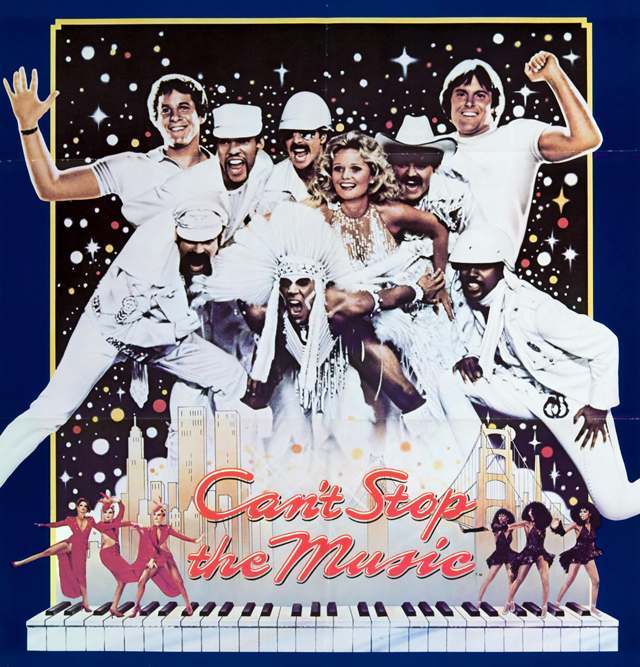
PS Bruce was in the Village People's magnificent movie, Can't Stop The Music, so will always be in the Fagburn Book Of Super Cool.
* Edited: Jenner says he wants to be referred to by male pronouns until he announces his new name.
PS The other story that's everywhere right now is the straight dude who asked his gay best friend to be his prom date. All media, but of course, think this is 'adorable'.
So brave etc etc.
Fagburn wishes him every happiness, of course,* as he does to anyone who's not a former Olympic athlete and current star of a bafflingly popular US reality TV series about rich people.
PS Bruce was in the Village People's magnificent movie, Can't Stop The Music, so will always be in the Fagburn Book Of Super Cool.
* Edited: Jenner says he wants to be referred to by male pronouns until he announces his new name.
PS The other story that's everywhere right now is the straight dude who asked his gay best friend to be his prom date. All media, but of course, think this is 'adorable'.
Wednesday, 5 February 2014
Sochi: Don't You Want Me?
Labels:
human league,
Putin,
Sochi Olympics,
Village People
Tuesday, 21 January 2014
Today's Sochi Balls: Take That Putin!
THE HAGUE, Netherlands -- The Dutch brass band that always performs at Olympic speed skating ovals is considering playing a popular gay song -- "Y.M.C.A." -- at the Sochi Winter Olympics to show its support for gay rights.
It remains to be seen how Russian and Olympic authorities would react should the Kleintje Pils band play a song widely considered to be a gay anthem. A ban on information about "nontraditional sexual relations" signed into law by Russian President Vladimir Putin has provoked widespread international outrage from critics who believe it discriminates against gays.
Band leader Ruud Bakker told The Associated Press on Tuesday that Kleintje Pils could mix the Village People's "Y.M.C.A." in its sing-along repertoire as "a signal." But he added that the band didn't want to antagonize organizers or turn its performances into a "political game."
"We will see if we can get one or two songs into the selection, knowing that in the Netherlands it will be seen as a signal we are thinking of them (gays)," Bakker said...
This idiocy knows no bounds.
It remains to be seen how Russian and Olympic authorities would react should the Kleintje Pils band play a song widely considered to be a gay anthem. A ban on information about "nontraditional sexual relations" signed into law by Russian President Vladimir Putin has provoked widespread international outrage from critics who believe it discriminates against gays.
Band leader Ruud Bakker told The Associated Press on Tuesday that Kleintje Pils could mix the Village People's "Y.M.C.A." in its sing-along repertoire as "a signal." But he added that the band didn't want to antagonize organizers or turn its performances into a "political game."
"We will see if we can get one or two songs into the selection, knowing that in the Netherlands it will be seen as a signal we are thinking of them (gays)," Bakker said...
This idiocy knows no bounds.
Labels:
Putin,
Russia,
Sochi,
Village People
Thursday, 7 February 2013
Private Eye: Tory MPs Deny Gay Rumours
From the new Private Eye.
Labels:
closet,
gay marriage,
Private Eye,
Village People
Wednesday, 6 February 2013
Marriage: Oh Dear...
Labels:
David Cameron,
gay mariage,
Peter Brookes,
Village People
Friday, 19 October 2012
Village People: Vs Village Idiots
After 35 years of belting out YMCA and In the Navy, the
Village
People are still bothered by one question: what’s this gay subtext that
people keep mentioning?
They have been described as “the first gay superstar group”. One of the original members was discovered dancing in a Native American head-dress in a gay nightclub and several others answered a job advert reading: “Macho types wanted. Must have moustache.”
But in an interview in a new documentary about the disco explosion in the 1970s, the group deny that there is any subtext to their work.
In The Secret Disco Revolution, Felipe Rose, the original Native American character in the Village People, protests that “we are just a party band”.
David “Scar” Hodo, better known as the construction worker, says: “People always talk about the double entendres. There was not one double entendre in the music.”
Their views are at odds with the premise of Jamie Kastner’s film, which was screened at the 56th BFI London Film Festival this week.
The Times.
Really?
That's most odd - David certainly wasn't in denial when I interviewed him.*
Maybe they just thought the interviewer was a jerk?
PS The idea that Village People were straight - only lead singers Victor Willis and Ray Simpson were - is one of Pop music's most enduring and unchallenged urban myths.
Still, not like a journalist would let the truth get in the way of a good story, eh?
It's also nonsense to say no straight people "got it".
It was a running joke at the time.
Why - to name but two examples from my TV childhood - did Noel Edmonds snigger and snort before playing In The Navy on Swapshop, or why did Roger Daltry introduce them on Top of the Pops with the immortal line; "Mind your backs"?
Every kid in the school playground seemed to "get it".
Historical revisionism - up yours!
* Admittedly I didn't get to talk to Felipe, but got to meet him and he was rather frosty. He also spoke rather a lot of overly-defensive balls when Kris Kirk interviewed them for Gay Times in the mid-80s.
They have been described as “the first gay superstar group”. One of the original members was discovered dancing in a Native American head-dress in a gay nightclub and several others answered a job advert reading: “Macho types wanted. Must have moustache.”
But in an interview in a new documentary about the disco explosion in the 1970s, the group deny that there is any subtext to their work.
In The Secret Disco Revolution, Felipe Rose, the original Native American character in the Village People, protests that “we are just a party band”.
David “Scar” Hodo, better known as the construction worker, says: “People always talk about the double entendres. There was not one double entendre in the music.”
Their views are at odds with the premise of Jamie Kastner’s film, which was screened at the 56th BFI London Film Festival this week.
The Times.
Really?
That's most odd - David certainly wasn't in denial when I interviewed him.*
Maybe they just thought the interviewer was a jerk?
PS The idea that Village People were straight - only lead singers Victor Willis and Ray Simpson were - is one of Pop music's most enduring and unchallenged urban myths.
Still, not like a journalist would let the truth get in the way of a good story, eh?
It's also nonsense to say no straight people "got it".
It was a running joke at the time.
Why - to name but two examples from my TV childhood - did Noel Edmonds snigger and snort before playing In The Navy on Swapshop, or why did Roger Daltry introduce them on Top of the Pops with the immortal line; "Mind your backs"?
Every kid in the school playground seemed to "get it".
Historical revisionism - up yours!
* Admittedly I didn't get to talk to Felipe, but got to meet him and he was rather frosty. He also spoke rather a lot of overly-defensive balls when Kris Kirk interviewed them for Gay Times in the mid-80s.
Labels:
BFI,
David Hodo,
Kris Kirk,
The Secret Disco Revolution,
The Times,
Village People
Friday, 18 May 2012
Donna Summer: Our Love
There's been some strange comfort in how much coverage there's been about Donna Summer and her death since yesterday.
And, for someone who was rarely taken seriously by critics in her 70s heyday, much of it pleasingly placing her as a pivotal figure in popular music.
(Though I've lost count of how many tributes I've heard from Paul Gambaccini...)
Just about every story and obit said she was very popular with The Gays, and then mentioned the controversy over that alleged "Aids is God's punishment" comment.
I think it's sad how this myth, and it is a myth, became such a big part of her story - it would look odd if an obituary didn't mention it - and despite her endless refutations and a high profile libel case.
The two best articles I've read by twelve inches or more both came from The Guardian.
Here's a beautiful piece by Alex Needham on her game-changing records and the power of her music; "charged with feelings of liberation, a pre-Aids world of pansexual freedom and adventure... her best records still pulsate with that spirit, the lifeforce of pop itself."
And here's Paul Flynn on Donna Summer as the "the accidental gay icon".
(I read it soon after it went online and many of the readers' comments brought up that Aids comment, often assuming it was true. Grrr...).
I know what Paul means, and agree - though I don't think it was completely accidental.
Interviewing Giorgio Moroder some years ago he told me during the Casablanca days rather a lot of the people they worked with were gay.
Casablanca's rarely given credit as a gay-friendly and pioneering gay-savvy label.
Giorgio told me he was too naive to notice they'd queered up the sleeve of his Nights In White Satin album, by adding a K to the title, and getting Giorgio shot for the cover photo in what looks like a gay sauna surrounded by some... knights in white satin.
KISS may have built Casablanca's city on Rock 'n' Roll, but their manager, Bill Aucoin, was gay - and I bet it was him who told those four nice Jewish boys to turn up the camp to 11.
As for Casablanca's other really big act, Village People, what need I say?
Though yes, they were often coded - and their bizarro film, Can't Stop The Music (often blamed for bankrupting the label) had them playing themselves laughably straight.
Casablanca also put out two of Disco's boldest singles, The Ritchie Family's Cruising The Streets and Skatt Brothers' Walk The Night.
And then there was Patrick Juvet and Paul Jabara - the latter wrote No More Tears (Enough Is Enough and It's Raining Men - and they signed Dusty and ruddy Cher!
But anyway I'm wibbling away.
As I said, these are two great pieces.
Donna Summer deserved writing about her as good as these.
Update: There's more! Jon Savage and Ewan Pearson on How I Feel Love Changed Pop. Wow.
And, for someone who was rarely taken seriously by critics in her 70s heyday, much of it pleasingly placing her as a pivotal figure in popular music.
(Though I've lost count of how many tributes I've heard from Paul Gambaccini...)
Just about every story and obit said she was very popular with The Gays, and then mentioned the controversy over that alleged "Aids is God's punishment" comment.
I think it's sad how this myth, and it is a myth, became such a big part of her story - it would look odd if an obituary didn't mention it - and despite her endless refutations and a high profile libel case.
The two best articles I've read by twelve inches or more both came from The Guardian.
Here's a beautiful piece by Alex Needham on her game-changing records and the power of her music; "charged with feelings of liberation, a pre-Aids world of pansexual freedom and adventure... her best records still pulsate with that spirit, the lifeforce of pop itself."
And here's Paul Flynn on Donna Summer as the "the accidental gay icon".
(I read it soon after it went online and many of the readers' comments brought up that Aids comment, often assuming it was true. Grrr...).
I know what Paul means, and agree - though I don't think it was completely accidental.
Interviewing Giorgio Moroder some years ago he told me during the Casablanca days rather a lot of the people they worked with were gay.
Casablanca's rarely given credit as a gay-friendly and pioneering gay-savvy label.
Giorgio told me he was too naive to notice they'd queered up the sleeve of his Nights In White Satin album, by adding a K to the title, and getting Giorgio shot for the cover photo in what looks like a gay sauna surrounded by some... knights in white satin.
KISS may have built Casablanca's city on Rock 'n' Roll, but their manager, Bill Aucoin, was gay - and I bet it was him who told those four nice Jewish boys to turn up the camp to 11.
As for Casablanca's other really big act, Village People, what need I say?
Though yes, they were often coded - and their bizarro film, Can't Stop The Music (often blamed for bankrupting the label) had them playing themselves laughably straight.
Casablanca also put out two of Disco's boldest singles, The Ritchie Family's Cruising The Streets and Skatt Brothers' Walk The Night.
And then there was Patrick Juvet and Paul Jabara - the latter wrote No More Tears (Enough Is Enough and It's Raining Men - and they signed Dusty and ruddy Cher!
But anyway I'm wibbling away.
As I said, these are two great pieces.
Donna Summer deserved writing about her as good as these.
Update: There's more! Jon Savage and Ewan Pearson on How I Feel Love Changed Pop. Wow.
Tuesday, 1 May 2012
Village People: Stonewall Riot Girls
"You and I were raised in the generation of turbulence and war and demonstrating. But we also had been raised on the philosophy of free love--'If it feels good, so long as it doesn't hurt anyone else.' When we hit 21 and free, those of us incorporated those philosophies into our adult lives. There was a generation that really loved what they had been taught in the '60s.
"We've got to hand it to Sylvia Rivera standing up to cops that could have shot her dead [at Stonewall]. 'I am in high heels, a dress, and a wig. Do not fuck with me and if you do, I will put that parking meter through your fucking windshield.' After that, the gay community said, 'We're gonna reclaim these images of what men can look like. Some people might want a different drag--that drag can be a leather actor or a cowboy.' The gay community was taking back the male image while women were putting on pants suits and straight men were letting their hair grow long on the road to metrosexuality. And yet we were the opposite of the leisure suit, trendwise.
"I understood that it was built on male images that had been sold by the Hollywood film industry for years. The first film, The Great Train Robbery, started with a cowboy looking you right in the lens with a gun. We infused it with a little Three Stooges humor, a little Marx brothers, a little fun.
"Everything I've done has been with a wink, a wiggle, and a wave, and wanting you to laugh along. I could never have gotten up and sang a song called 'Macho Man' with a straight face. Think about it!"
Randy Jones, the cowboy, talking to the Village Voice's Michael Musto.
Fagburn has met David Hodo, the construction worker, and Felipe Rose, the "Red Indian" BY THE BILLY WAY!
"We've got to hand it to Sylvia Rivera standing up to cops that could have shot her dead [at Stonewall]. 'I am in high heels, a dress, and a wig. Do not fuck with me and if you do, I will put that parking meter through your fucking windshield.' After that, the gay community said, 'We're gonna reclaim these images of what men can look like. Some people might want a different drag--that drag can be a leather actor or a cowboy.' The gay community was taking back the male image while women were putting on pants suits and straight men were letting their hair grow long on the road to metrosexuality. And yet we were the opposite of the leisure suit, trendwise.
"I understood that it was built on male images that had been sold by the Hollywood film industry for years. The first film, The Great Train Robbery, started with a cowboy looking you right in the lens with a gun. We infused it with a little Three Stooges humor, a little Marx brothers, a little fun.
"Everything I've done has been with a wink, a wiggle, and a wave, and wanting you to laugh along. I could never have gotten up and sang a song called 'Macho Man' with a straight face. Think about it!"
Randy Jones, the cowboy, talking to the Village Voice's Michael Musto.
Fagburn has met David Hodo, the construction worker, and Felipe Rose, the "Red Indian" BY THE BILLY WAY!
Labels:
Michael Musto,
Randy Jones,
stonewall,
Village People,
Village Voice
Tuesday, 8 February 2011
AfterElton: Ignorance Is Stength
Here's 'AfterElton.com's Top 50 Gay Male Musicians'by Davis Mallory.
"Our countdown of modern popular music's most influential and intriguing openly gay or bisexual male artists."
Even by the standards of the gay media this article is littered with errors.
Just take a look at the last page and check AfterElton's Top 4 Gay Male Musicians.
Village People have become "The Village People" - and gay gay gay construction worker Village Person David Hodo is pronounced straight.
Freddie Mercury is misspelt "Freddy Mercury".
Elton John is at number one.
"He was knighted in 1995 for his charitable work by Queen Elizabeth and wed his husband, David Furnish, in 2005..."
No, he wasn't.
I could go on...
Labels:
AfterElton,
Davis Mallory,
Elton John,
Freddie Mercury,
Village People
Tuesday, 13 July 2010
YMCA: The Y Fronts Rebranding Campaign
Many stories about the YMCA rebranding itself as "The Y", today.
Most take their cue from the New York Times.
Most, but of course, mention the Village People hit - nudge-nudge, wink-wink.
We're told YMCA is "a gay anthem".
It was meant to be that when it was written 30 years ago, but it's not today.
Now you'll hear the record filling dancefloors not at gay clubs, but at (straight) wedding discos.
I've yet to see one news story explain why the YMCA was so eulogised.
The song is addressed to a young runaway, who's told the YMCA is a cheap place to stay, where he'll meet other gay men, and arguably most importantly of all, he's practically guaranteed to get some man-on-man action.
The Y insist "the new brand strategy" has nothing to do with how their name may have been brought into disrepute.
It's mainly "to increase understanding"; ie most people don't know what the fuck they actually do.
I think they're being sincere here.
But maybe this is all by-the-by.
If you read gay fiction or gay porn from the 1970s, American gay men always called the YMCA "The Y" anyway.
Labels:
The Y,
Village People,
YMCA
Subscribe to:
Posts (Atom)