To mark the 30th anniversary of BFI Flare: London LGBT Film Festival, we are delighted to announce the Top 30 LGBT Films of All Time in the first major critical survey of LGBT films.
Over 100 film experts including critics, writers and programmers such as Joanna Hogg, Mark Cousins, Peter Strickland, Richard Dyer, Nick James and Laura Mulvey, as well as past and present BFI Flare programmers, have voted the Top 30 LGBT Films of All Time. The poll’s results represent 84 years of cinema and 12 countries, from countries including Thailand, Japan, Sweden and Spain, as well as films that showed at BFI Flare such as Orlando (1992), Beautiful Thing (1996), Weekend (2011) and Blue Is the Warmest Colour (2013)....
BFI.
The top ten...
1 Carol (Todd Haynes, USA 2015).
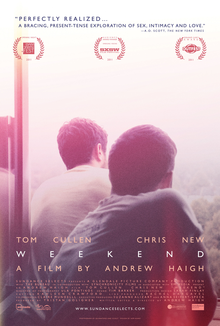
2 Weekend (Andrew Haigh, UK 2011).
3 Happy Together (Wong Kar-wai, Hong Kong/Japan/South Korea 1997).
4 Brokeback Mountain (Ang Lee, USA/ Canada 2005).
5 Paris Is Burning (Jennie Livingston, USA 1990).
6 Tropical Malady (Apichatpong Weerasethakul, Thailand/France/Germany/Italy 2004).
7 My Beautiful Laundrette (Stephen Frears, UK 1985).
8 All About My Mother (Pedro Almodóvar, Spain/France 1999).
9 Un Chant d’Amour (Jean Genet, France 1950).
10 My Own Private Idaho (Gus Van Sant, USA 1991).
Sake, Brokeback Mountain and My Own Private Idaho are chick flicks, and Weekend is as dull as a wet weekend.
Still, at least that hour-and-a-half depoliticised rictus grin, Pride, didn't make their final cut.
Showing posts with label BFI. Show all posts
Tuesday, 15 March 2016
Film: 30 Love
Labels:
BFI,
brokeback mountain.,
flare,
pride the movie,
Weekend
Wednesday, 18 March 2015
Queer: Class War
Tricia Tuttle, the BFI’s deputy director of festivals, said: “Queer filmmakers have delivered some of cinema’s most striking, vital, challenging, provocative and beautiful films and BFI Flare has been key in bringing these to UK audiences over the last 29 years...'
Why is it only the gay middle classes who now use the term 'queer'?
An empty signifier of pseudo-radicalism.
That name again... Tricia Tuttle!
Update: How can you be a 'queer' 'LGBT' woman exactly? Either your're a lesbian or not. Did George Carlin die in vain?
Labels:
BFI,
george carlin,
queer,
queer theory
Saturday, 11 October 2014
Pasolini: You Have Killed Me
Early in the morning of November 2 1975, in Idroscalo, a shanty town outside Rome, the 53-year-old Italian film-maker and writer Pier Paolo Pasolini was found beaten beyond recognition and run over by his own Alfa Romeo. Twelve hours later, Giuseppi Pelosi, a 17-year-old rent boy, confessed to the killing. Yet almost 40 years on, the known facts of the murder still form no coherent picture, and the case remains open.
Abel Ferrara’s new film, Pasolini, starring Willem Dafoe in the lead role, chronicles the last two days of the Italian director’s life. Mingling a documentary verismo style with dreamlike images, the film grips like a thriller, yet leaves the circumstances surrounding the murder as murky as ever. “I don’t care too much who killed Pasolini, only that he was killed,” says Ferrara, a straight-talking, expletive-happy New Yorker. “Whoever it was behind the wheel of that f---ing Alfa Romeo – did he intentionally roll over Pasolini? Who knows? It was dark, man, the headlamps might have been off.
“It’s not as if an American director like me is going to uncover the truth of what happened 40 years ago. I’m no detective. The tragedy is that Pasolini was in the prime of his creative life – a passionate, compassionate man lost to the world.” ...
Telegraph.
But was this notorious Italian gay communist bumped off by L'Uomo? *
This film director clearly hasn't the foggiest...
November 2, 1975 – the final day of Pier Paolo Pasolini’s life as he awaits certain fury over Salo. In this artist-to-artist love letter, Abel Ferrara (Bad Lieutenant) casts a sublime Willem Dafoe to play Pasolini in the hours prior to his brutal murder. It’s a death that has aroused suspicion and controversy, but Ferrara neither investigates nor accuses. Instead he celebrates fearlessness, creativity and a sharp mind, dramatising the unproduced screenplay that shows Pasolini’s undimmed urge to provoke, Porno-Teo-Kolossal (lesbians and gay men have an orgy of procreation as the hero seeks Jesus’ birthplace). He also recreates Pasolini’s final interview about disruptive art and politics where he commented, with unwitting prescience, ‘given the life I lead, I pay a price... it’s like a descent into hell. But when I come back – if I come back – I’ve seen other things’.
You may also enjoy this documentary, Whoever Tells The Truth Shall Die.
PS 'Pasolini is meeee!', You Have Killed Me, Morrissey.
* ie The Man.
Tuesday, 18 March 2014
BFI: 10 Great British Gay Films (Cause Everyone Loves A List)
Ben Whishaw-starrer Lilting, the opening night gala film of BFI Flare: London LGBT Film Festival, is the latest in a rich history of British gay movies. Here are 10 of its most illustrious predecessors...
1 Borderline (1930)
2 First A Girl (1935)
3 Victim (1961)
1 Borderline (1930)
2 First A Girl (1935)
3 Victim (1961)
4 The Leather Boys (1964)
5 Sebastiane (1976)
6 Nighthawks (1978)
7 My Beautiful Laundrette (1985)
8 Young Soul Rebels (1991) *
9 Beautiful Thing (1996)
10 Weekend (2011)
BFI - Who provide a brief but informed blurb for each film.
Watch a selection of LGBT titles on the BFI Player.
5 Sebastiane (1976)
6 Nighthawks (1978)
7 My Beautiful Laundrette (1985)
8 Young Soul Rebels (1991) *
9 Beautiful Thing (1996)
10 Weekend (2011)
BFI - Who provide a brief but informed blurb for each film.
Watch a selection of LGBT titles on the BFI Player.
Fagburn's favourite British gay film is Prick Up Your Ears, thanks for asking. Alan Bennett does Orton, who could ask for more?
* Actually this is the worst British movie - gay or straight - Fagburn has ever paid money to see.
Saturday, 16 March 2013
South: Broadcasting It
It involves a dashing Polish army lieutenant exiled in the US deep
south as civil war approaches and the question of who he really loves:
the plantation owner's angry niece, Miss Regina, or the tall, blond,
rugged officer who arrives suddenly – a handsome man called Eric
MacClure.
The television play is heady, emotional stuff tackling issues of race as well as sexuality and that it was broadcast by ITV on a winter's night 54 years ago is nothing short of remarkable. The BFI now believes the newly rediscovered production is the earliest known gay TV drama.
South, adapted by Gerald Savory from an original play by Julian Green and screened on 24 November 1959, "is a milestone" in gay cultural history, said the BFI curator Simon McCallum.
He added that its leading man, Peter Wyngarde, deserved particular praise. "I think you have to give Wyngarde a massive pat on the back in terms of the bravery in taking this role. There were quite bad reactions from some of the press."
They included this breezily offensive review from the Daily Sketch's critic: "I do NOT see anything attractive in the agonies and ecstasies of a pervert, especially in close-up in my living room. This is not prudishness. There are some indecencies in life that are best left covered up."
From The Guardian Film.
Quite a find - this doesn't even get a mention in Keith Howes' otherwise peerless Broadcasting It: An Encyclopaedia Of Homosexuality On Film, Radio And TV In The UK 1923-1993.
This is being screened at the London Lesbian & Gay Film Festival tonight and tomorrow.
South will be available to watch for nowt from next month at the BFI's mediatheques in Glasgow, Newcastle, Wrexham, Cambridge, Derby and London.
PS I hear the documentary, I Am Divine, is very good.
PPS Thing on the similarly ground-breaking 1963 fillum, The Servant, in The Independent today.
Update: A letter to the Guardian in praise of the author Julian (Julien) Green.
The television play is heady, emotional stuff tackling issues of race as well as sexuality and that it was broadcast by ITV on a winter's night 54 years ago is nothing short of remarkable. The BFI now believes the newly rediscovered production is the earliest known gay TV drama.
South, adapted by Gerald Savory from an original play by Julian Green and screened on 24 November 1959, "is a milestone" in gay cultural history, said the BFI curator Simon McCallum.
He added that its leading man, Peter Wyngarde, deserved particular praise. "I think you have to give Wyngarde a massive pat on the back in terms of the bravery in taking this role. There were quite bad reactions from some of the press."
They included this breezily offensive review from the Daily Sketch's critic: "I do NOT see anything attractive in the agonies and ecstasies of a pervert, especially in close-up in my living room. This is not prudishness. There are some indecencies in life that are best left covered up."
From The Guardian Film.
Quite a find - this doesn't even get a mention in Keith Howes' otherwise peerless Broadcasting It: An Encyclopaedia Of Homosexuality On Film, Radio And TV In The UK 1923-1993.
This is being screened at the London Lesbian & Gay Film Festival tonight and tomorrow.
South will be available to watch for nowt from next month at the BFI's mediatheques in Glasgow, Newcastle, Wrexham, Cambridge, Derby and London.
PS I hear the documentary, I Am Divine, is very good.
PPS Thing on the similarly ground-breaking 1963 fillum, The Servant, in The Independent today.
Update: A letter to the Guardian in praise of the author Julian (Julien) Green.
Labels:
BFI,
Divine,
I am Divine,
London lesbian and gay film festival,
South,
The servant
Friday, 19 October 2012
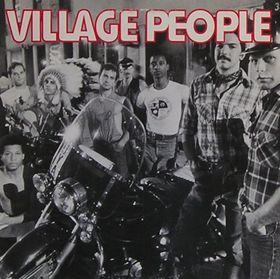
Village People: Vs Village Idiots
After 35 years of belting out YMCA and In the Navy, the
Village
People are still bothered by one question: what’s this gay subtext that
people keep mentioning?
They have been described as “the first gay superstar group”. One of the original members was discovered dancing in a Native American head-dress in a gay nightclub and several others answered a job advert reading: “Macho types wanted. Must have moustache.”
But in an interview in a new documentary about the disco explosion in the 1970s, the group deny that there is any subtext to their work.
In The Secret Disco Revolution, Felipe Rose, the original Native American character in the Village People, protests that “we are just a party band”.
David “Scar” Hodo, better known as the construction worker, says: “People always talk about the double entendres. There was not one double entendre in the music.”
Their views are at odds with the premise of Jamie Kastner’s film, which was screened at the 56th BFI London Film Festival this week.
The Times.
Really?
That's most odd - David certainly wasn't in denial when I interviewed him.*
Maybe they just thought the interviewer was a jerk?
PS The idea that Village People were straight - only lead singers Victor Willis and Ray Simpson were - is one of Pop music's most enduring and unchallenged urban myths.
Still, not like a journalist would let the truth get in the way of a good story, eh?
It's also nonsense to say no straight people "got it".
It was a running joke at the time.
Why - to name but two examples from my TV childhood - did Noel Edmonds snigger and snort before playing In The Navy on Swapshop, or why did Roger Daltry introduce them on Top of the Pops with the immortal line; "Mind your backs"?
Every kid in the school playground seemed to "get it".
Historical revisionism - up yours!
* Admittedly I didn't get to talk to Felipe, but got to meet him and he was rather frosty. He also spoke rather a lot of overly-defensive balls when Kris Kirk interviewed them for Gay Times in the mid-80s.
They have been described as “the first gay superstar group”. One of the original members was discovered dancing in a Native American head-dress in a gay nightclub and several others answered a job advert reading: “Macho types wanted. Must have moustache.”
But in an interview in a new documentary about the disco explosion in the 1970s, the group deny that there is any subtext to their work.
In The Secret Disco Revolution, Felipe Rose, the original Native American character in the Village People, protests that “we are just a party band”.
David “Scar” Hodo, better known as the construction worker, says: “People always talk about the double entendres. There was not one double entendre in the music.”
Their views are at odds with the premise of Jamie Kastner’s film, which was screened at the 56th BFI London Film Festival this week.
The Times.
Really?
That's most odd - David certainly wasn't in denial when I interviewed him.*
Maybe they just thought the interviewer was a jerk?
PS The idea that Village People were straight - only lead singers Victor Willis and Ray Simpson were - is one of Pop music's most enduring and unchallenged urban myths.
Still, not like a journalist would let the truth get in the way of a good story, eh?
It's also nonsense to say no straight people "got it".
It was a running joke at the time.
Why - to name but two examples from my TV childhood - did Noel Edmonds snigger and snort before playing In The Navy on Swapshop, or why did Roger Daltry introduce them on Top of the Pops with the immortal line; "Mind your backs"?
Every kid in the school playground seemed to "get it".
Historical revisionism - up yours!
* Admittedly I didn't get to talk to Felipe, but got to meet him and he was rather frosty. He also spoke rather a lot of overly-defensive balls when Kris Kirk interviewed them for Gay Times in the mid-80s.
Labels:
BFI,
David Hodo,
Kris Kirk,
The Secret Disco Revolution,
The Times,
Village People
Monday, 13 August 2012
BFI: Queens Of TV Comedy
As part of the London 2012 Festival, the cultural complement to the
London Games, Dick Fiddy looks at the pioneering 'golden girls' of TV
comedy in Britain who fronted their own shows in a male-dominated era...
BFI blurb - programme opens Thursday.
From music hall star Olive Fox to Smack The Pony.
Oddly ambiguous title seeing as British TV comedy has always been stuffed with another kind of queen.
As is the BFI.
And as will be the audience for this.
BFI blurb - programme opens Thursday.
From music hall star Olive Fox to Smack The Pony.
Oddly ambiguous title seeing as British TV comedy has always been stuffed with another kind of queen.
As is the BFI.
And as will be the audience for this.
Labels:
BFI,
Queens of tv comedy
Saturday, 10 March 2012
Peter Cook: Genius At Work
There's a short Peter Cook season at the BFI starting Monday, and marking what would have been his 75th year.
Rather neatly it leads into the London Lesbian & Gay Film Festival - whatever that is.
Thursday, 11 August 2011
Dirk Bogarde: He Who Dared
"What a gripping film – melodramatic and self-conscious, yes, but forthright and bold. Its tendency to show homosexuality as a tragic, pitiable quirk of nature may now look like condescension, but for the time this was real risk-taking. It has some of the earnestness of the traditional "issue" movie, but it's also a drum-tight thriller with a neat twist in the tail. Some characters, notably a kindly liberal police inspector, voice rather elaborate campaigning sentiments about how the unreformed law is just a blackmailers' charter. But there's some succinct point-making too: the same inspector, bemused by his sergeant's loathing of homosexuals..."
Insightful piece by Peter Bradshaw in The Guardian Film Blog.
• He Who Dared: A Dirk Bogarde Season starts at the BFI tonight.
Insightful piece by Peter Bradshaw in The Guardian Film Blog.
• He Who Dared: A Dirk Bogarde Season starts at the BFI tonight.
Labels:
BFI,
Dirk Bogarde,
He Who Dared,
Victim
Subscribe to:
Posts (Atom)