Showing posts with label Alfred Hitchcock. Show all posts

Wednesday, 1 April 2015

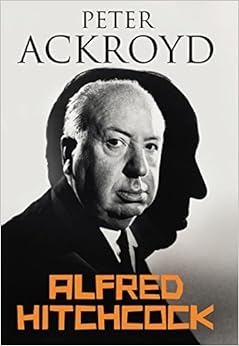
Peter Ackroyd: On Hitchcock

Something that surprised Ackroyd in his trawl through the films was Hitchcock's effeminacy. "I had no idea he was like that. You occasionally get little snatches of documentary film, in which he's behaving – not outrageously, but in a rather camp way. I think it was a component of his personality, but of course he was too scared and undemonstrative to allow it to take over." In the book, he says: "It would be an interesting parlour game to name any [of Hitchcock's] leading characters who were not intimated to be bisexual." Seriously? What, Richard Hannay in The 39 Steps? "Well, OK, not him," Ackroyd says, smiling. "But they all seem a bit… funny, don't they? Michael Redgrave in The Lady Vanishes? Cary Grant in North by Northwest? The two men in Strangers on a Train? They're all fey and unserious and camp. And he treated his heroines as more masculine than the men."

Peter Ackroyd in The Independent on the titular subject of his latest biography, Alfred Hitchcock,


Update: Peter develops his theme in The Sunday Times...

He was inspired to begin his newest book, a well- received biography of Alfred Hitchcock published last week, after discovering the director was “camp” and “really rather a screamer” with a “funny mincing step”, which Ackroyd demonstrates by walking his index and middle fingers along his desk in a prissy sort of fashion and doing a little pout. Might Hitchcock have been bisexual, I ask.

“Well, he said he had ‘poofy’ moments when he was reading Vogue. But if that qualified you as a homosexual, half the population would be condemned.”

Tuesday, 29 March 2011

Farley Granger: 1925-2011

There's a great obituary of Farley Granger in The Guardian today.
"Early on in his career, the actor Farley Granger, who has died aged 85, worked with several of the world's greatest directors, including Alfred Hitchcock on Rope (1948) and Strangers On a Train (1951), Nicholas Ray on They Live By Night (1949) and Luchino Visconti on Senso (1953). Yet Granger failed to sustain the momentum of those years, meandering into television, some stage work and often indifferent European and American movies.
"The reasons were complicated, owing much to his sexuality and an unwillingness to conform to Hollywood pressures, notably from his contract studio, MGM, and the mogul Samuel Goldwyn. Granger refused to play the publicity or marrying game common among other gay stars and turned down roles he considered unsuitable, earning a reputation – in his own words – for being "a naughty boy"..."
Also Farley Granger - A Life In Clips.